Polished concrete vs. traditional tiles: Durability and cost for ground floor living: common mistakes that cost you money
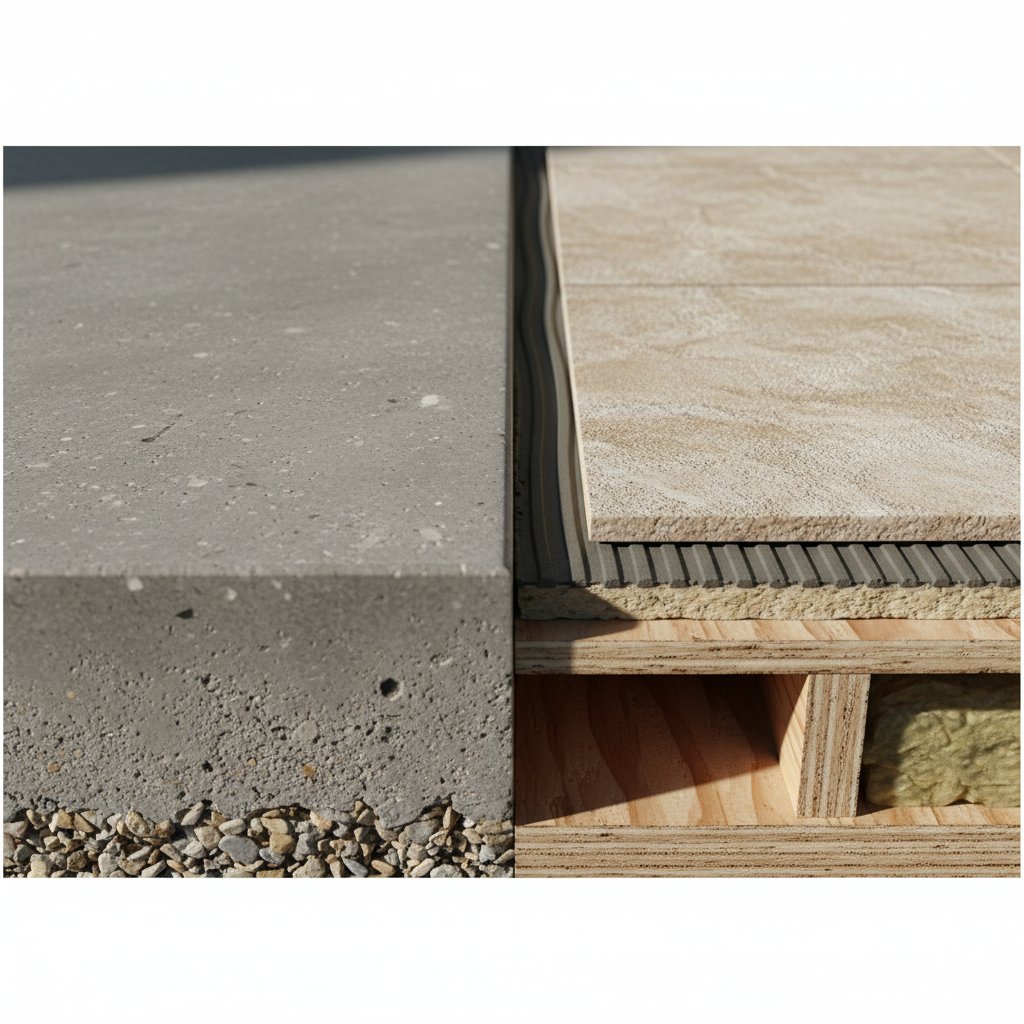
The Ground Floor Showdown: Polished Concrete vs. Traditional Tiles
You're standing in your ground floor living space, staring at the flooring quote, and wondering if you've just been sold a bill of goods. Here's the thing: choosing between polished concrete and traditional tiles isn't just about aesthetics—it's about avoiding the expensive mistakes that'll have you ripping up floors in five years.
I've watched too many homeowners blow their budgets on the wrong flooring choice. Let's break down what actually matters: real durability, honest costs, and the costly errors nobody tells you about upfront.
Polished Concrete: The Industrial Darling
The Upside
- Longevity that makes sense: A properly installed polished concrete floor lasts 20-30 years without needing replacement. Compare that to tiles at 15-20 years, and you're looking at one less renovation cycle in your lifetime.
- Upfront cost reality: Expect £50-90 per square meter for polished concrete. Yes, that's higher than basic tiles, but here's where people mess up—they don't factor in the grout work, adhesives, and labor that tiles demand.
- Thermal mass advantage: Concrete absorbs heat during the day and releases it at night. Ground floor spaces with underfloor heating see 15-20% better heat retention compared to tiles.
- Zero grout lines: No grout means no breeding ground for mold, no discoloration, and no re-grouting every 3-5 years at £8-12 per square meter.
- Maintenance is genuinely minimal: Sweep, mop with pH-neutral cleaner, reseal every 3-4 years at £5-10 per square meter. Done.
The Downside
- Cold underfoot: Without underfloor heating, concrete feels like walking on a winter sidewalk. Budget an extra £50-75 per square meter for heating systems or accept cold toes from October to March.
- Sound amplification: Concrete reflects noise. Drop a glass and the whole house knows. You'll need rugs and soft furnishings to compensate.
- Installation mistakes are permanent: A botched polish job can't be hidden. You're grinding and resealing at significant expense, or living with a mottled mess.
- Cracking is real: Despite what contractors promise, concrete can crack. Control joints help, but they're not foolproof.
Traditional Tiles: The Tried and True
The Upside
- Price flexibility: Ceramic tiles start at £15-25 per square meter for materials. Porcelain runs £25-60 per square meter. Add £20-35 per square meter for installation, and you're still often under polished concrete costs.
- Replacement is straightforward: Crack a tile? Replace that single tile for £30-50 including labor. Try doing that with concrete.
- Design variety is endless: Wood-look, marble-look, geometric patterns—tiles give you options that concrete can't touch. Bored in five years? Rip them up and start fresh.
- DIY-friendly for the brave: Handy homeowners can tackle tile installation themselves. Nobody's polishing concrete in their spare time.
- Warmer feel: Tiles don't suck heat from your feet like concrete does. Porcelain especially feels more comfortable barefoot.
The Downside
- Grout is your enemy: It stains, cracks, harbors bacteria, and needs replacing. That pristine white grout? Give it 18 months in a kitchen before it's dingy gray.
- Hidden installation costs: Leveling compounds, waterproofing membranes, tile spacers, grout, sealers—the extras add up fast. Budget an extra 25-30% beyond the quoted tile price.
- Lippage ruins everything: When tiles aren't level with each other, you get trip hazards and a cheap-looking finish. Rectified tiles and skilled installers cost more but save heartache.
- Durability varies wildly: Cheap ceramic tiles chip and crack under furniture weight. You need porcelain rated PEI 4 or 5 for ground floor living spaces, which pushes costs up.
Head-to-Head Comparison
| Factor | Polished Concrete | Traditional Tiles |
|---|---|---|
| Initial Cost (per m²) | £50-90 | £35-95 (materials + installation) |
| Lifespan | 20-30 years | 15-20 years |
| Maintenance (annual) | £50-100 for 50m² | £150-300 for 50m² (cleaning, grout care) |
| Repair Cost | High (extensive rework) | Low (individual tiles) |
| Installation Time | 3-5 days for 50m² | 5-7 days for 50m² |
| Resale Impact | Polarizing (love it or hate it) | Neutral to positive |
The Costly Mistakes Nobody Mentions
Mistake #1: Skipping the moisture test. Ground floor slabs can have rising damp. Installing either flooring without a proper damp-proof membrane ruins everything within 2-3 years. Budget £8-15 per square meter for proper moisture barriers.
Mistake #2: Choosing aesthetics over PEI rating. That gorgeous delicate tile rated PEI 2? It'll be scratched and dull within a year on a ground floor. Pay for PEI 4 or 5 rated porcelain, or regret it.
Mistake #3: Ignoring subfloor prep. Both options need perfectly level subfloors. Rushing this step causes lippage in tiles and uneven polishing in concrete. Proper prep adds £10-20 per square meter but prevents £1,000+ fixes later.
Mistake #4: DIY concrete polishing. Renting a grinder doesn't make you a concrete polisher. Professional equipment and experience matter. A botched DIY job costs £40-60 per square meter to fix professionally.
The Straight Answer
Choose polished concrete if you're staying put for 10+ years, love minimalist aesthetics, and have underfloor heating already planned. The higher upfront cost pays back through lower maintenance and longer lifespan.
Go with quality porcelain tiles if you want design flexibility, easier repairs, and aren't planning to stay forever. Just don't cheap out on the tile rating or installation quality.
Either way, spend money on proper subfloor prep and moisture protection. That's where the real savings happen—by not having to redo everything in three years.